
Not all meadows are the same 
Nature conservation means preserving the biodiversity typical of a region, including at the genetic level.
At first glance, meadows may look the same to the untrained eye. But a dry meadow hosts very different species than a nutrient-rich pasture. Even within the same meadow type, the species composition can vary from region to region.
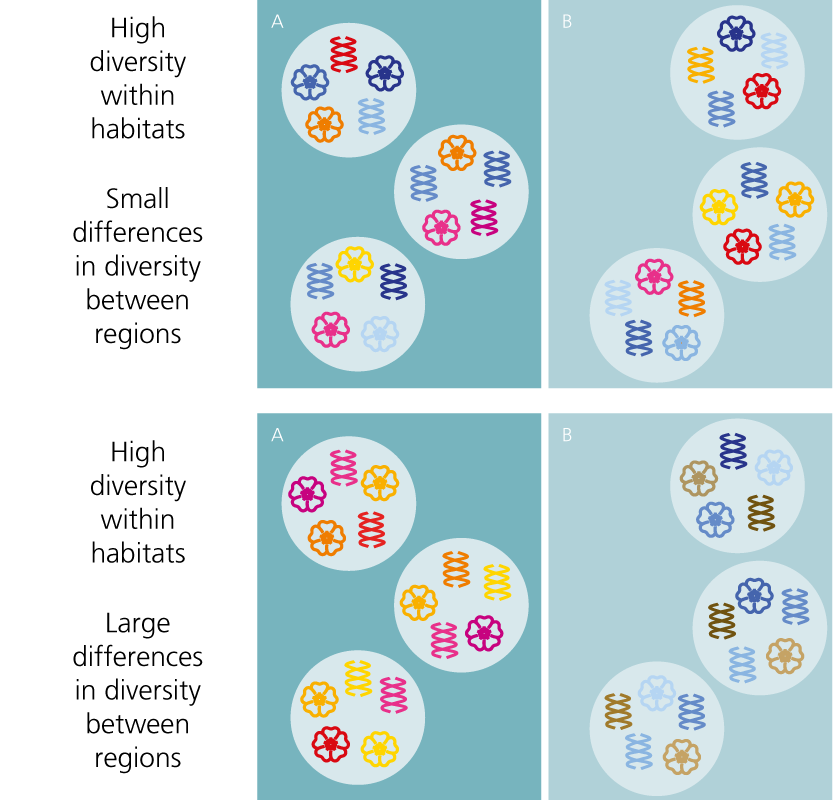
Genetic diversity, both within a meadow and between regions, also plays a role: it ensures plants can adapt, which is particularly important in the face of climate change.
All these differences must be considered when restoring or establishing a meadow.
Therefore, seeds should be selected so as to promote local diversity and preserve regional differences. Only in this way can nature remain as diverse as the landscapes of Switzerland.
Four meadows, four worlds 
The plant composition of a natural meadow or pasture depends on the site conditions (e.g., wet or dry, sunny or shady, soil type, nutrients) and on how it is managed (e.g., whether it is mown or grazed, and whether this happens early or late in the year, with or without fertilizer). If these conditions remain the same over a longer period of time, a typical plant community develops. This is referred to as a meadow type.
Even with the naked eye, you can see that meadows can look very different depending on their location, climate, and use. Here are four typical types of meadows in Switzerland.


Diversity 
Diversity can be understood on two levels:
- Between regions: How communities in different regions differ in their species composition and genes.
- At a single location: Which species and genes are present there.
Genetic diversity may be invisible, but it is just as important as the visible diversity of species and habitats.