


Why genetic diversity matters 
Genetically diverse seed collections should be used not only in flower meadows, but also in forests.
In Switzerland, more than 90% of forest regeneration takes place naturally. Even so, foresters plant up to three million young trees and shrubs every year, for example after an avalanche or to prepare forests for future climate conditions. Forests need to remain adaptable and resilient.
This requires genetically diverse tree populations. The more diverse their genetic makeup, the greater the chance that some young plants will withstand heat, drought, or new diseases.
This starts with seed collection. However, for reasons of time and cost, seeds are often harvested from only a few mother trees. This can reduce genetic diversity and thus negatively affect the next tree generation.
How much genetic diversity is enough? 
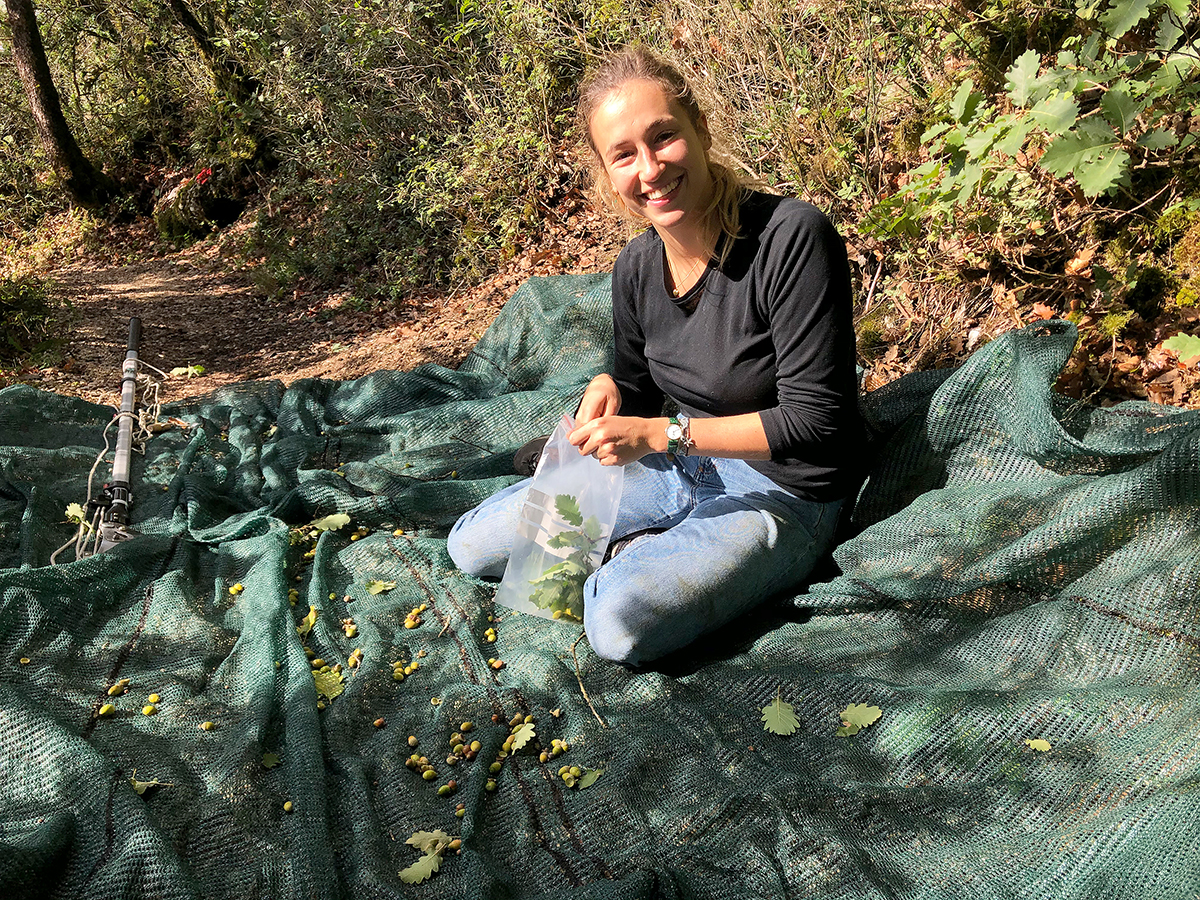
Using molecular genetic analyses (microsatellites), we investigated how to collect acorns in a way that captures the greatest possible diversity. Two factors are critical: the number of mother trees and the number of acorns collected per tree.
The result: as few as 100 acorns per mother tree are enough to cover almost the entire genetic variation of its seeds – a number that current harvesting practices already achieve.
However, to capture 95% of the genetic diversity of an entire seed stand, seeds must be collected from more than 40 different mother trees. That is considerably more than usual, but for oaks, it is entirely feasible.
For tree species that require climbing to harvest seeds, this is too labor-intensive. But one thing is clear: proper seed harvesting is important for a sustainable forest.