


The German tamarisk, a survivor on the river 

River landscapes are valuable but often endangered hotspots for habitat and species diversity. The connectivity of river habitats and species populations plays a crucial role in maintaining this diversity. One way to measure how well natural populations are interconnected is through genetic relationship analyses of a typical plant species of dynamic alpine rivers: the German tamarisk.
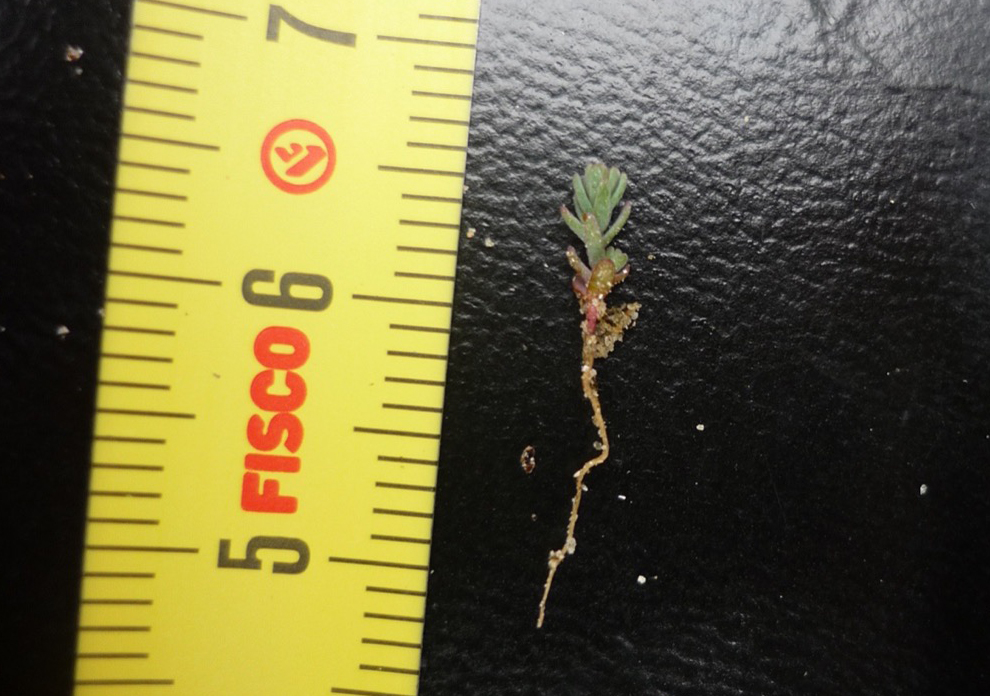
The German tamarisk is a typical pioneer plant on gravel bars and banks of near-natural rivers with fluctuating water levels. It depends on recurring floods followed by prolonged dry periods. Other plants cannot survive these conditions.
The German tamarisk defies these extremes with its long roots: they anchor the plant during floods and tap into water from the subsoil during droughts. However, site dams and a lack of sediment have greatly reduced its habitat and led to a dramatic decline in its occurrence.
With the loss of habitat connectivity, genetic diversity has also decreased. As an important indicator species for dynamic river landscapes, the German tamarisk is now on the Red List of endangered species.
Dispersed by wind and water 
In summer, every German tamarisk shrub produces hundreds of flowers and millions of seeds. These are spread by wind and water.
Plant fragments or even entire plants can also be carried downstream and washed up at new locations, where they take root and form new shoots.
Wind and water thus enable dispersal both upstream and downstream along rivers.
River landscapes are hotspots of diversity 
Near-natural alpine river landscapes are characterized by a mosaic of habitats: dry, sun-exposed gravel bars, steep banks, as well as moist areas along the main river and its tributaries.
This diversity provides suitable habitats for a wide range of plants, animals, and fungi. For these species to spread, connectivity of habitats along the river – as well as between water and land – is particularly important.
Whether this connectivity is intact can be assessed indirectly using genetic methods (microsatellites).
Gene flow on the restored Flaz 

We studied how far and in which direction the German tamarisk spreads on the newly restored section of the Flaz in the Upper Engadine.
Using kinship analyses, we compared populations on gravel bars and riverbanks with older populations in the watershed, both upstream and downstream.
The genetic diversity in the catchment area can be divided into three clusters. For each site, we calculated the proportion of each of the three clusters.
At the restored sites on the Flaz, the genetic patterns show that colonization occurs predominantly downstream, but there is also genetic exchange with nearby populations along the Inn River.
The spatial distribution of genetic diversity suggests that both waterborne and windborne dispersal have contributed to the diversity on the new gravel bars and riverbanks.


Contact 
Meet the scientist 

Contact 
Dr. Sabine Franziska Fink
Research Associate
Biodiversity and Conservation Biology
Habitat Dynamics
sabine.fink(at)wsl.ch
+41 44 739 2836
WSL Birmensdorf