


eDNA reveals the hidden life in forest soils 
The hidden world beneath our feet is teeming with life and crucial to the health of our forests.
Thanks to eDNA analyses, we can now for the first time record the biodiversity in forest soil in detail. This large-scale project, unique in Switzerland at this scale, has two main goals:
- to investigate the state and development of soil biodiversity in Swiss forests;
- to link belowground biodiversity with aboveground biodiversity.
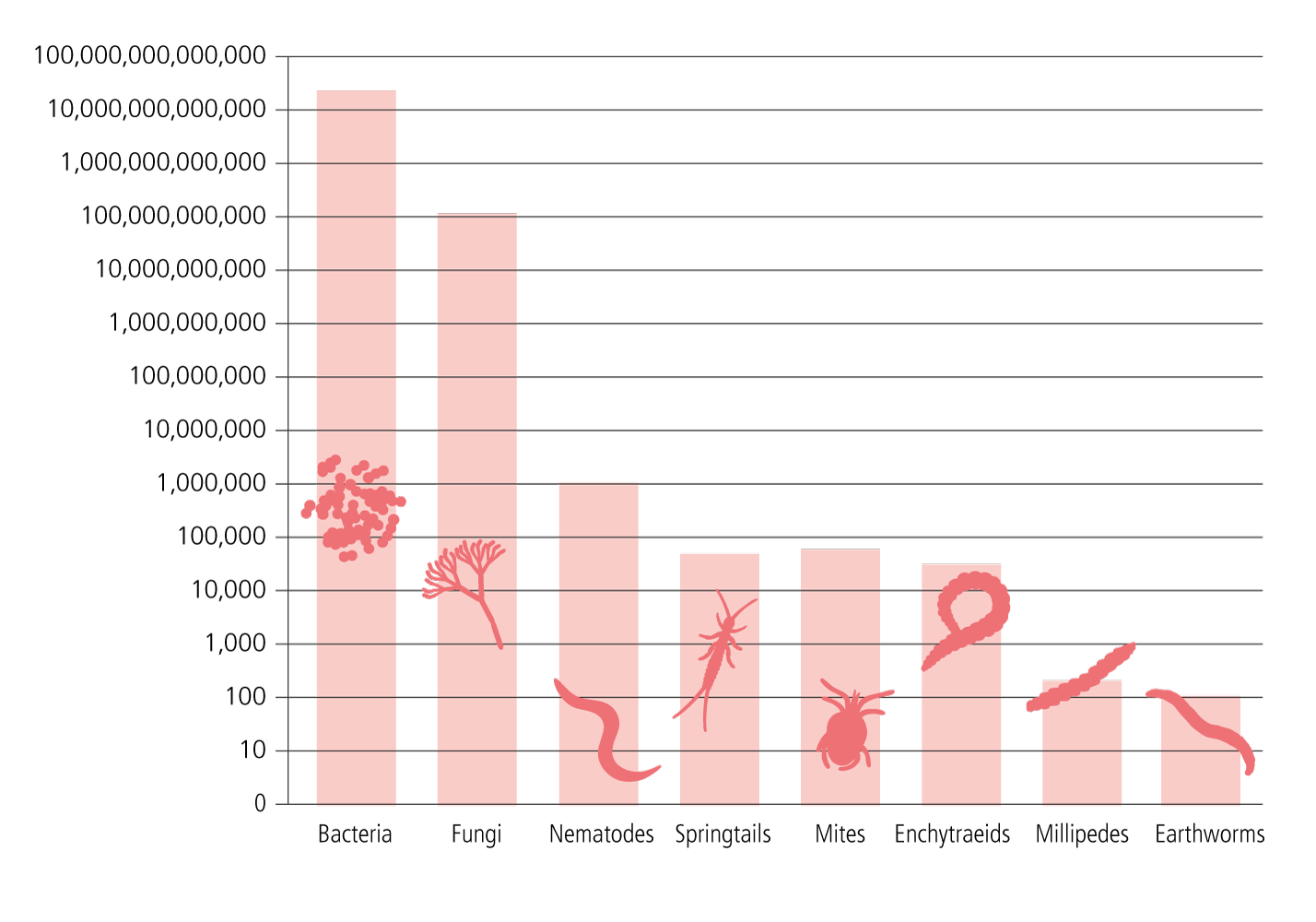
To achieve this, we extracted all DNA from soil samples collected at 800 plots of the Swiss National Forest Inventory and decoded three specific DNA markers, so-called barcodes. This allowed us to compile species lists of bacteria, fungi, and invertebrates.
By comparing these species lists with site characteristics such as soil pH and nutrient concentration, vegetation composition, and climate data, we can determine how soil biodiversity is influenced by environmental factors, and how forest ecosystems may respond to global change.
From soil to genetic material 

At each site, we collected two soil samples using a soil corer (0-10 cm depth), and then combined them into one sample in the laboratory. From just 5 grams of soil, we broke open the cells to release the DNA, which we then extracted, purified and dissolved in 5 ml of buffered water. From this solution, we took a tiny drop – transparent, yet packed with genetic information – for biodiversity analysis.
Meet the scientist 

Contact 
Dr. Aline Frossard
Research Associate
Biodiversity and Conservation Biology
Ecology of biotic communities
aline.frossard(at)wsl.ch
+41 44 739 2807
WSL Birmensdorf