


No forest without fungi? 
With ongoing climate change, it is not only the species diversity of fungi that is important, but also their intraspecific genetic diversity.
Especially under changing environmental conditions, ectomycorrhizal fungi are critical partners of trees, as they enhance the uptake of various nutrients and water through the roots. These abilities vary depending on the fungal species. That’s why high species diversity is important for trees.
Equally important is high intraspecific genetic diversity within a fungal species: it increases the probability that some individuals may better cope with new environmental stresses such as drought. Low intraspecific diversity, on the other hand, can weaken fungal populations, impair tree health, and ultimately affect the stability of forests.
This is why we study how genetic diversity of an ectomycorrhizal fungus – Cenococcum geophilum – is maintained in forests under drought stress, and how different fungal individuals from local populations influence the growth of young pedunculate oaks. To tackle this, we inoculate roots of pedunculate oaks with different fungal individuals and measure tree growth under varying soil moisture conditions.
Our goal is to understand how fungi adapt to environmental conditions and how they help our forest trees withstand climate change.
What is mycorrhiza? 
Mycorrhiza refers to the close symbiotic relationship between plant roots and fungi, which benefits both partners: with its hyphae – microscopic threadlike filaments that make up the mycelium –, the fungus helps the plant to absorb water and nutrients from the soil and, in return, receives sugar from photosynthesis.
There are several forms of root colonization, but the main distinction is between ectomycorrhiza and endomycorrhiza.
In endomycorrhizal forms, the fungus penetrates the root cortex cells and forms different structures for nutrient exchange depending on the plant species.
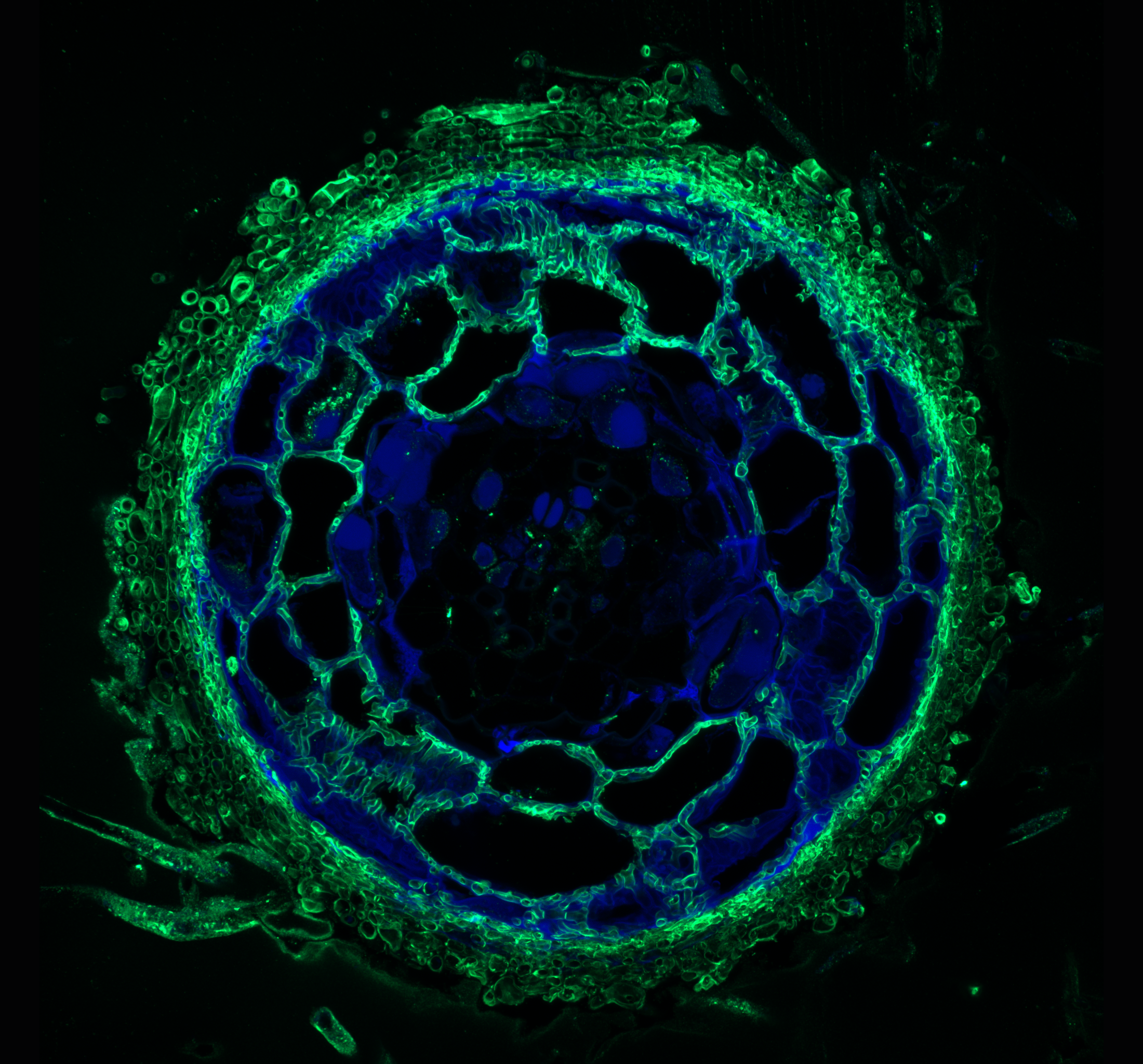
The endomycorrhizal form dominates in our forest trees. Here, the fungus envelops the root tips and penetrates between the cells of the tree to enable nutrient exchange. Many well-known fungi belong to the ectomycorrhizal group, such as chanterelles, porcini, and truffles.
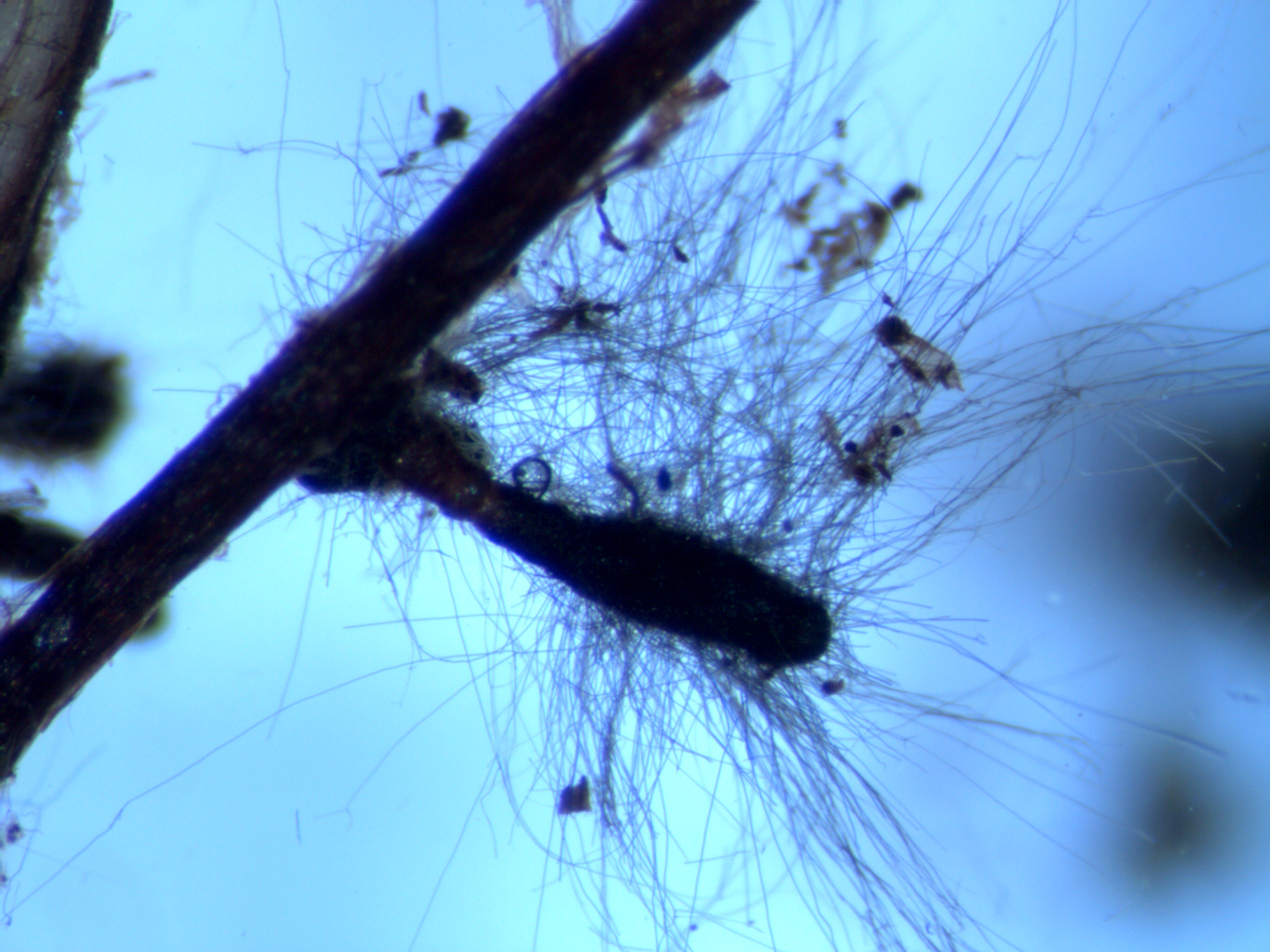
Cenococcum geophilum, the fungus in our study, is one of the most widespread ectomycorrhizal fungi worldwide. It grows in boreal, temperate, and subtropical zones on the roots of most forest trees.
This ascomycete is also commonly found in sites with environmental stress, highlighting its important role in forest ecosystems. Cenococcum geophilum occurs only underground on roots – either as a mycelium in the soil or as small, highly drought-resistant black spheres called sclerotia.
Meet the scientist 

Contact 
Dr. Benjamin Dauphin
Research Staff
Biodiversity and Conservation Biology
Ecological Genetics
benjamin.dauphin(at)wsl.ch
+41 44 739 2656
WSL Birmensdorf